How to Avoid Signal Loss in High-Speed FPC Connector Applications

Jun. 26, 2026

|

Share:

How to Avoid Signal Loss in High-Speed FPC Connector Applications

In the rapidly evolving world of high-speed electronics, users frequently encounter the frustrating phenomenon of signal loss in flexible printed circuit (FPC) connectors. Common pain points include diminished signal integrity, increased latency, and potential device failure, which can all lead to decreased performance. As a solution, understanding and mitigating signal loss is essential. For instance, an electronics engineer shared their experience of redesigning a circuit board for data transfer speeds exceeding 10 Gbps, only to face random disconnections due to inadequate connectors. By switching to high-quality connectors from a reputable FPC connector manufacturer, they achieved consistent performance without dropouts, highlighting the critical need for quality in your components.

Required Preparation

Before diving into the solutions for avoiding signal loss, ensure you are equipped with the following materials and tools:

  • Materials:
    • High-speed flexible printed circuit connectors (FPC)
    • Appropriate gauge wires
    • PCB design software (like Altium or Eagle)
  • Tools:
    • Multimeter for testing signal integrity
    • Oscilloscope for visual signal analysis
    • Soldering tools for any necessary modifications

Having quality components from a trusted FPC connector manufacturer like M&T ensures reliable connections and minimizes the risk of signal degradation.

Step-by-Step Guidance

Follow these detailed steps to effectively minimize signal loss in your high-speed FPC connector applications:
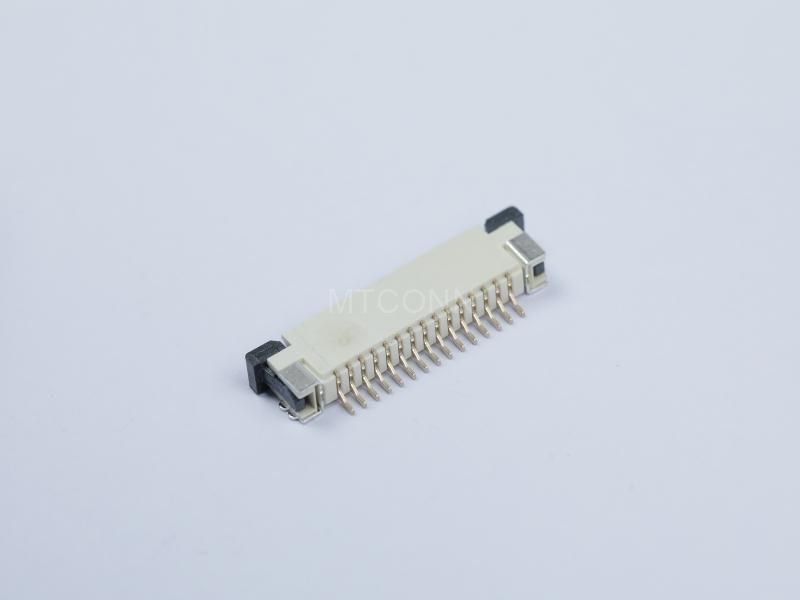
  1. Step 1: Assess your signal requirements Determine the required data rates and electrical specifications. Common ranges for high-speed data applications are between 8 Gbps to 16 Gbps, depending on the usage scenario.
  2. Step 2: Choose the right FPC connector Select connectors that are rated for your desired speeds and frequencies. For example, M&T offers connectors that have been tested and verified for 25 GHz or higher, providing robust performance.
  3. Step 3: Optimize PCB layout Minimize trace lengths and avoid sharp angles to reduce signal reflections. Maintain controlled impedance around 50 ohms for consistent signal integrity. Use vias judiciously to avoid additional inductive loss.
  4. Step 4: Test your connections Use a multimeter to check continuity and an oscilloscope to analyze the signal for loss or distortion. Look for rising edge times under 30 ps, which indicates fast transition times and minimal signal degradation.
  5. Step 5: Implement shielding if necessary In scenarios with excessive electromagnetic interference (EMI), consider adding shielded cables or connectors. M&T’s solutions include integrated shielding options that significantly improve overall performance.
  6. Step 6: Monitor performance regularly Following implementation, regularly analyze the performance, ideally once every quarter, to ensure that there isn't unexpected degradation over time.
How to Avoid Signal Loss in High-Speed FPC Connector Applications

Common Errors and Solutions

Many users may encounter several common errors in high-speed FPC connector applications, such as:

  • Using unmatched connectors: Ensure connector grades match the application requirements. Using low-quality connectors can lead to up to 50% signal loss.
  • Poor soldering techniques: Inadequate solder joints can increase resistance, leading to signal integrity issues. Aim for a solder joint temperature of around 250°C for optimal results.
  • Neglecting thermal management: Excessive heat can affect performance. Utilize thermal pads to maintain optimal operating temperatures under 85°C.

Summary and Suggestions

To effectively avoid signal loss in high-speed FPC connector applications, it is crucial to select appropriate components, optimize PCB layouts, and regularly analyze performance. Partnering with reliable FPC connector manufacturers like M&T can provide the necessary quality assurance you need for your projects. Always stay proactive in your analysis and testing to maintain high data transfer rates and minimize disruption in operational efficiency.

FAQ

Q1: What factors contribute to signal loss in FPC connectors?
A1: Factors include connector quality, PCB layout, soldering quality, and environmental conditions like EMI.

Q2: How can I measure signal integrity?
A2: Use an oscilloscope to visualize the signal waveform and measure parameters like rise time and amplitude to assess integrity.

Q3: What is the ideal impedance for high-speed FPC connectors?
A3: The ideal controlled impedance should be around 50 ohms for most high-speed applications to ensure minimal reflection and transmission loss.

< FPC Connector vs Board-to-Board Connector: Which Saves More PCB Space > What Is the Difference Between Right-Angle and Vertical FPC Connectors

Latest News

Learn More

Jun

26, 2026

Why Connector Miniaturization Is Reshaping FPC Connector Manufacturing

In today's rapidly advancing technological landscape, manufacturers face significant challenges, particularly with the increasing demand for compactness in electronic devices. The miniaturization of connectors, especially Flexible Printed Circuit (FPC) connectors, addresses pressing pain points such as space constraints and performance efficiency in design. By adopting miniaturized FPC...

Jun

26, 2026

FPC Connector Installation Tips for Automated SMT Production Lines

In the fast-paced arena of automated SMT (Surface-Mount Technology) production lines, FPC (Flexible Printed Circuit) connectors play a crucial role in ensuring efficient electronic assembly. However, improper installation can lead to costly downtimes and manufacturing defects. According to recent industry reports, up to 30% of production delays stem from connector-related issues. By implementing...

Jun

26, 2026

Why SMT Compatibility Is Critical for Modern FPC Connector Manufacturing

In the rapidly evolving landscape of electronics manufacturing, the importance of Surface Mount Technology (SMT) compatibility in Flexible Printed Circuit (FPC) connectors cannot be overstated. As manufacturers race to produce high-performance devices that meet consumer demands, overlooking SMT compatibility can have severe ramifications. The underlying problem lies in the misalignment between...

Hot Products

Leave Your Message

Tell us what products you need.

We're here to help and will respond quickly!

Telephone:

+86 769 2305 0865

WeChat:

+86 135 4374 6930 (Jeremy)

+86 134 2479 8678 (Paul)

*
*
*
*
  • aaa--bbbb
  • Afghanistan
  • Albania
  • Algeria
  • American Samoa
  • Andorra
  • Angola
  • Anguilla
  • Antarctica
  • Antigua and Barbuda
  • Argentina
  • Armenia
  • Aruba
  • Australia
  • Austria
  • Azerbaijan
  • Bahamas
  • Bahrain
  • Bangladesh
  • Barbados
  • Belarus
  • Belgium
  • Belize
  • Benin
  • Bermuda
  • BBhutan
  • Bolivia
  • Bosnia and Herzegovina
  • Botswana
  • Bouvet Island
  • Brazil
  • British Indian Ocean Territory
  • Brunei Darussalam
  • Bulgaria
  • Burkina Faso
  • Burundi
  • Cambodia
  • Cameroon
  • Canada
  • Cape Verde
  • Cayman Islands
  • Central African Republic
  • Chad
  • Chile
  • China
  • Christmas Island
  • Cocos (Keeling) Islands
  • Colombia
  • Comoros
  • Congo
  • Cook Islands
  • Costa Rica
  • Cote D'Ivoire
  • Croatia
  • Cuba
  • Cyprus
  • Czech Republic
  • Denmark
  • Djibouti
  • Dominica
  • East Timor
  • Ecuador
  • Egypt
  • El Salvador
  • Equatorial Guinea
  • Eritrea
  • Estonia
  • Ethiopia
  • Falkland Islands (Malvinas)
  • Faroe Islands
  • Fiji
  • Finland
  • France, Metropolitan
  • French Guiana
  • French Polynesia
  • Gabon
  • Gambia
  • Georgia
  • Germany
  • Ghana
  • Gibraltar
  • Greece
  • Greenland
  • Grenada
  • Guadeloupe
  • Guam
  • Guatemala
  • Guinea
  • Guinea-Bissau
  • Guyana
  • Haiti
  • Honduras
  • Hong Kong, China
  • Hungary
  • Iceland
  • India
  • Indonesia
  • Iran (Islamic Republic of)
  • Iraq
  • Ireland
  • Israel
  • Italy
  • Jamaica
  • Japan
  • Jordan
  • Kazakhstan
  • Kenya
  • Kiribati
  • North Korea
  • South Korea
  • Kuwait
  • Kyrgyzstan
  • Lao People's Democratic Republic
  • Latvia
  • Lebanon
  • Lesotho
  • Liberia
  • Libyan Arab Jamahiriya
  • Liechtenstein
  • Lithuania
  • Luxembourg
  • Macau
  • Madagascar
  • Malawi
  • Malaysia
  • Maldives
  • Mali
  • Malta
  • Marshall Islands
  • Martinique
  • Mauritania
  • Mauritius
  • Mayotte
  • Mexico
  • Micronesia
  • Moldova
  • Monaco
  • Mongolia
  • Montserrat
  • Morocco
  • Mozambique
  • Myanmar
  • Namibia
  • Nauru
  • Nepal
  • Netherlands
  • New Caledonia
  • New Zealand
  • Nicaragua
  • Niger
  • Nigeria
  • Niue
  • Norfolk Island
  • Northern Mariana Islands
  • Norway
  • Oman
  • Pakistan
  • Palau
  • Panama
  • Papua New Guinea
  • Paraguay
  • Peru
  • Philippines
  • Pitcairn
  • Poland
  • Portugal
  • Puerto Rico
  • Qatar
  • Reunion
  • Romania
  • Russian Federation
  • Rwanda
  • Saint Kitts and Nevis
  • Saint Lucia
  • Saint Vincent and the Grenadines
  • Samoa
  • San Marino
  • Saudi Arabia
  • Senegal
  • Seychelles
  • Sierra Leone
  • Singapore
  • Slovak Republic
  • Slovenia
  • Solomon Islands
  • Somalia
  • South Africa
  • Spain
  • Sri Lanka
  • St. Helena
  • Sudan
  • Suriname
  • Swaziland
  • Sweden
  • Switzerland
  • Syrian Arab Republic
  • Taiwan, China
  • Tajikistan
  • Tanzania
  • Thailand
  • Togo
  • Tokelau
  • Tonga
  • Trinidad and Tobago
  • Tunisia
  • Turkey
  • Turkmenistan
  • Turks and Caicos Islands
  • Tuvalu
  • Uganda
  • Ukraine
  • United Arab Emirates
  • United Kingdom
  • United States
  • Uruguay
  • Uzbekistan
  • Vanuatu
  • Vatican City State (Holy See)
  • Venezuela
  • Viet Nam
  • Virgin Islands (U.S.)
  • Wallis and Futuna Islands
  • Western Sahara
  • Yemen
  • Zambia
  • Zimbabwe
  • Montenegro
  • Serbia
  • Palestine
  • South Sudan
  • Jersey
*
*
Jeremy Wang

Jeremy Wang

Paul Ye

Paul Ye